The United Nations Military Observers Course – 41
UN Certified Course
Description
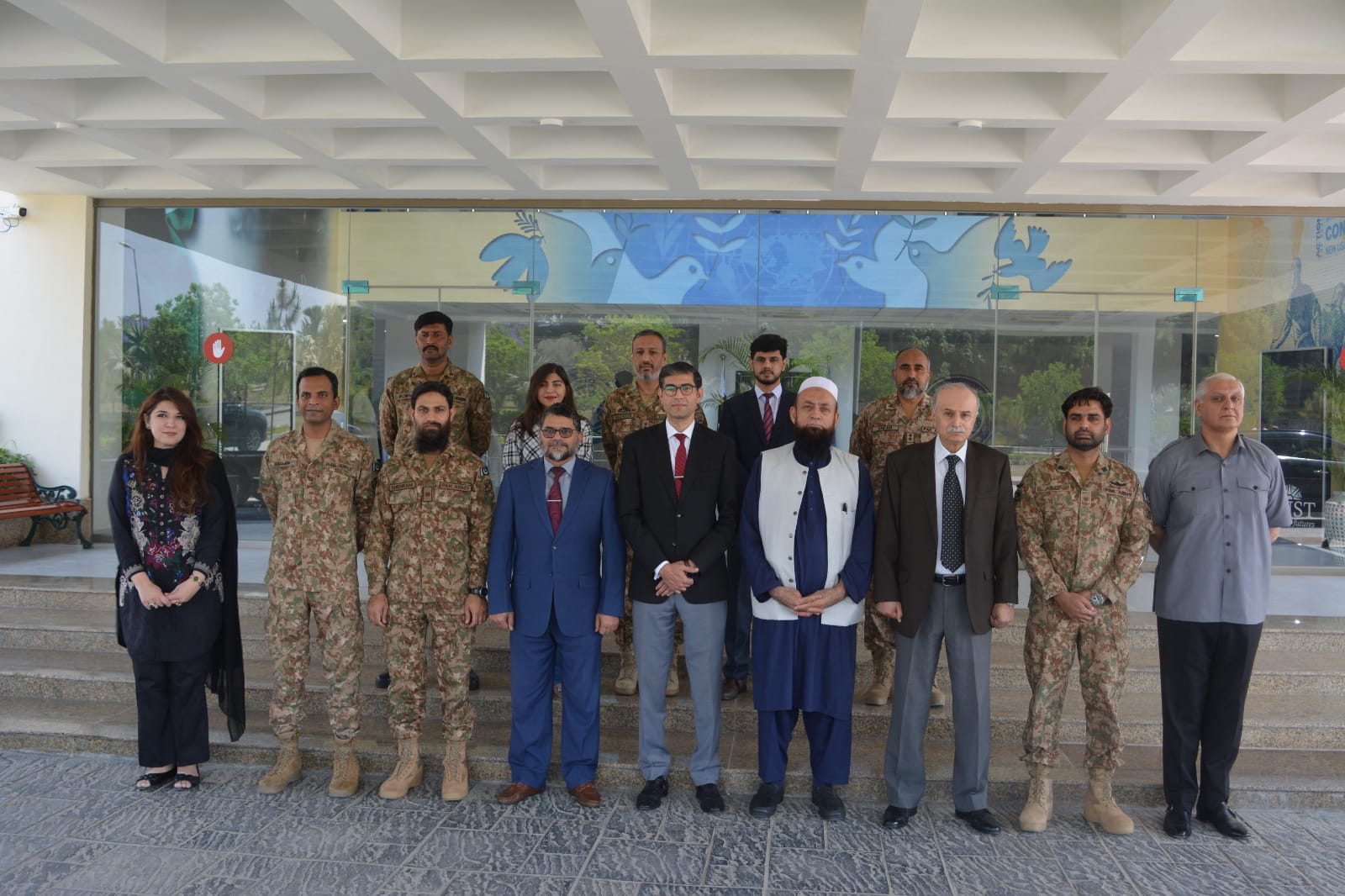
The United Nations Military Observers Course – 41 (UNMOC – 41) was conducted at the Centre for International Peace and Stability (CIPS), NUST Islamabad, from 21 April to 2 May 2025. The objective of this course was to equip Peacekeepers for their positions as UN Military Observers in both current and prospective UN Peacekeeping Operations.
Participation
The course had three participants from the Pakistan Army
Conduct Methodology
Participants underwent a three-tiered training process, encompassing Core Pre-deployment Training Materials (CPTM), Specialized Training Materials (STM), and the facets of in-mission training. Military Observers from selected missions provided briefings on mission environments, mandates, and the specific roles/assignments of military observers. This approach offered participants a more contextualized understanding of their deployment areas.
Closing Ceremony
The closing ceremony for the course took place on 2 May 2025 and the closing remarks were delivered by the Associate Dean of the Centre for International Peace and Stability (CIPS) during the closing ceremony of the United Nations Military Observer Course – 41 (UNMOC-41). In his address, he welcomed the participants and faculty, noting that the two-week course at CIPS provided a training environment that was as diverse as the UN itself and closely mirrored the operational realities of a UN office setting. He highlighted the achievements of the Department of Peacekeeping Training, which has organized 214 courses and trained over 4,086 peacekeepers in accordance with UN policies and guidelines, while also maintaining institutional partnerships with leading regional and international peacekeeping training centers. He further underscored Pakistan’s longstanding and meaningful role in UN peacekeeping operations, emphasizing its consistent contributions of soldiers, policemen, diplomats, civil servants, and relief workers under the UN flag, as well as its distinction as one of the leading Troop Contributing Countries (TCCs). In conclusion, he congratulated the graduates of UNMOC-41, expressing confidence that the course would serve as a milestone in broadening their understanding of UN systems and preparing them for their future roles as Military Observers in complex peacekeeping missions. He extended his best wishes to all participants for continuing success in their professional pursuits.
Course Pictures