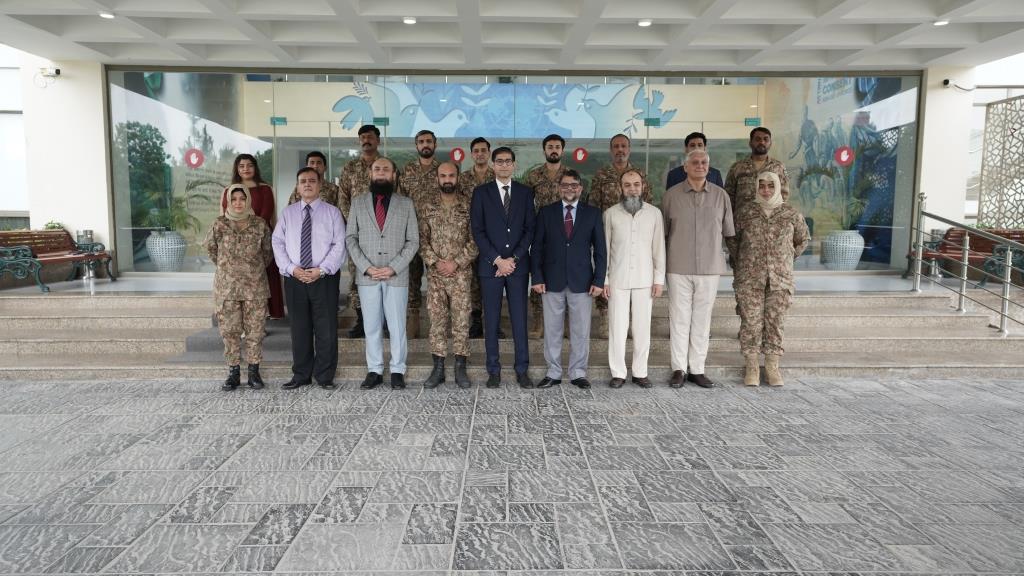
United Nations Military Peacekeeping Intelligence Officers Course (UNMPKIOC-02)
UN COURSE
Description
The United Nations Military Peacekeeping Intelligence Officers Course (UNMPKIOC-2) was held from 03 to 13 August 2026. The purpose of this course was to provide a thorough understanding of the peacekeeping environment in which United Nations personnel may operate in remote, fragile security environments. As peace operations continue to evolve and adapt within this complex operational context, UN Military Peacekeeping Intelligence Officers (UNMPKIO) are required to engage in a comprehensive pre-deployment training program in accordance with the Department of Peace Operations (DPO) Operational Readiness, Assurance, and Performance Standards. The training materials focused on intelligence frameworks and built upon the UNSO lessons to better prepare MPKIO for UN peacekeeping missions.
Participation
Eight officers from the Pakistan Army participated in the UNMPKIOC-02 course, including two lady officers.
Conduct Methodology
The UN Military Peacekeeping Intelligence Officers Course employed a blended training approach that combined interactive lectures, case studies, syndicate discussions, and scenario-based practical exercises. Instruction was provided by Subject Matter Experts (SMEs), Peace Operations Training faculty, experienced UN representatives, and intelligence practitioners to ensure both theoretical knowledge and operational relevance. A compressed Core Pre-Deployment Training Module (CPTM) was delivered during the first three days, followed by specialized intelligence-focused training involving intelligence tools and skills, culminating in a comprehensive scenario-based exercise at the end of the course to improve practical skills in a UN peacekeeping setting.
Closing Ceremony
In his closing remarks, Associate Dean CIPS, Dr. Muhammad Makki, expressed his pleasure with the participants of UNMPKIOC-02, highlighting that training at CIPS reflects the United Nations’ diversity and professionalism. Dr. Makki observed that, despite its brevity of two weeks, the course successfully simulated a UN office environment. He shared that the DPOT Department, in its brief yet impactful history, has conducted 236 courses and trained over 4,531 peacekeepers in accordance with UN policies and guidelines. He appreciated the DPOT faculty for successfully running the UNMPKIOC course for the first time, which marked an achievement and demonstrated their dedication to UN Peacekeeping. Furthermore, he underscored that CIPS maintains institutional partnerships with leading regional and international peacekeeping training institutions. Dr. Makki also recognized Pakistan’s substantial contributions to UN peacekeeping missions through soldiers, police officers, diplomats, civil servants, and relief workers, and expressed pride in Pakistan’s standing as one of the leading troop-contributing countries worldwide.
Concluding his remarks, he conveyed his confidence that the course would serve as a milestone in enhancing their understanding of the UN system and their future responsibilities as Intelligence Officers. He extended his best wishes to all participants for continuing success in their professional endeavors.
United Nations Military Peacekeeping Intelligence Officers Course (UNMPKIOC-02)